

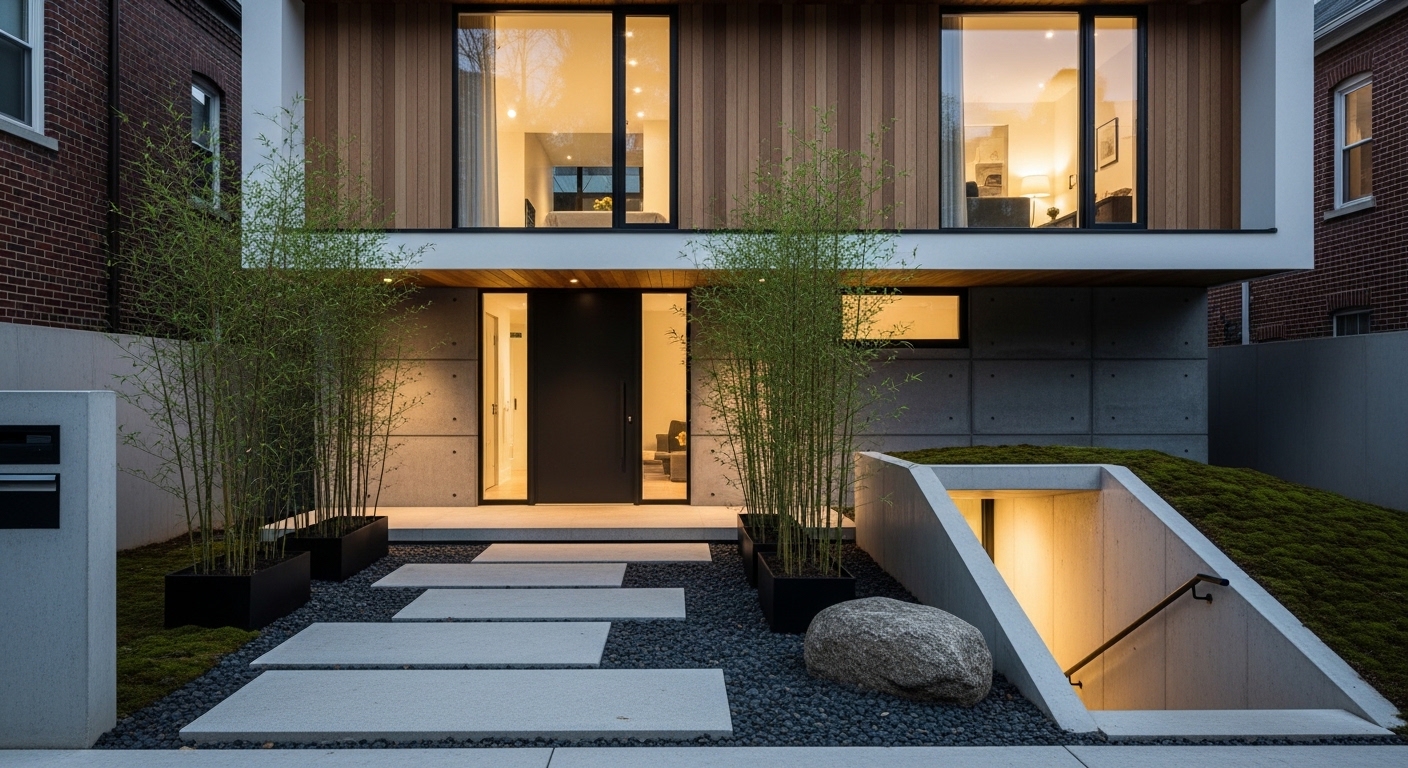
In recent years, interest in shelters has increased due to changes in international affairs and an increase in natural disasters. However, where does the prevalence of shelters in Japan stand in comparison to major countries around the world? In this article, we compare shelter diffusion rates in Japan and the rest of the world, and explain the background and future prospects for shelters.
Shelter Penetration in Japan
Actual situation of shelter installation in ordinary households
There are still not many examples of nuclear shelters or full-scale disaster prevention shelters installed in ordinary households in Japan. Although there is a market for shelters for individuals, the installation cost can range from several million yen to tens of millions of yen, which is a large investment for an average household. For this reason, they are only considered when new houses are built or when major renovations are made, and the hurdle for retrofitting existing houses is even higher.
In recent years, however, changes in international conditions and the need to prepare for natural disasters have become widely recognized,Inquiries and consultations from individuals are gradually increasing。The number of households seriously considering installing shelters is gradually increasing, and the market is showing definite signs of growth.
There is some scattered information on the Internet that puts the shelter penetration rate in Japan at "0.021 TP3T," but the source of this figure is not clear, and in fact, no accurate statistical data exists.
Public facilities and municipal initiatives
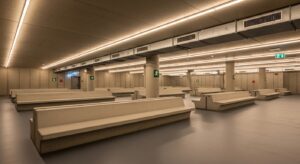
On the other hand, in some public facilities, subway stations, underground malls, and public underground parking lots have been designated as emergency shelters. In addition, some municipalities have published lists of facilities where residents can evacuate in the event of an emergency, but these do not necessarily function as full-fledged shelters.
Although underground facilities are being utilized in metropolitan areas such as Tokyo, facilities that can respond to special threats such as nuclear attack or chemical weapons are limited. From the perspective of disaster prevention, priority has long been given to the development of evacuation centers for natural disasters such as earthquakes and typhoons.
Comparison with Shelter Penetration Rates Worldwide
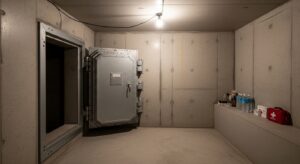
Switzerland and Israel: Countries with high penetration rates
Looking around the world, Switzerland, known as a shelter powerhouse, requires by law that shelters be installed in new buildings,Shelter capacity relative to population has reached almost 1001 TP3T。Switzerland has long maintained a policy of prioritizing the safety of its citizens while maintaining its status as a neutral country.
Similarly, in Israel, geopolitical tensions have made it mandatory by law for all new homes and public buildings to have shelters. Shared shelters are standard in condominiums and apartments, and individual shelter rooms are standard in single-family homes, and public awareness of shelters is extremely high.
Because of this thoroughness of law and protection of the people, Switzerland and Israel have「shelter-producing country」and has become a model case for other countries around the world.
Korea, Singapore, Norway and other major countries
In South Korea, subway stations and underground shopping malls are designed to have shelter functions as part of civil defense due to the country's relationship with North Korea, ensuring high capacity mainly in urban areas. Regular evacuation drills are also conducted to maintain the public's awareness of disaster prevention.
In Singapore, all new houses built after 1998 are required to have air-raid shelters, which are usually used for storage and other purposes. Scandinavian countries such as Norway and Finland have also continued the tradition of building shelters in public facilities and residences since the Cold War era, and have maintained high penetration rates.
Where is the difference from Japan?
The biggest difference between these countries and Japan is,「Whether shelter installation is required by law」This is the point. Another major factor is the difference in perception of geopolitical threats. While countries such as Switzerland, Israel, and South Korea are constantly confronted with potential threats and have a high awareness of defense at the national level, Japan has had relatively few opportunities to perceive direct threats, partly due to its geographical location as an island nation.
Background of lack of penetration in Japan
Geographical Factors and Security Awareness as an Island Nation
Japan's geographical characteristics as an island nation have led to a background of historically low invasion by foreign enemies. For this reason, the awareness of security risks at the national level tends to be relatively low compared to countries that share borders with other countries on land.
Another reason why shelter development has not been a priority is that the postwar pacifist values have focused more on economic development and social welfare than on military threats. In recent years, new threats such as the North Korean missile problem have been recognized, but no concrete measures have been taken to improve shelters.
Legal and administrative support issues
Japan,There is no law requiring the installation of shelters like in Switzerland or Israel。In addition, there are no subsidy programs or tax incentives for shelter installation, so there is little incentive for individuals and companies to install shelters on their own.
Even at the municipal level, it is more than shelter maintenance.Measures against natural disasters such as earthquakes and typhoonsIn the budget allocation process, shelter-related items tend to be placed on the back burner. Although evacuation facilities are being designated in accordance with the National Protection Law, the number of facilities with full-scale shelter functions is limited.
Changes in shelter demand in recent years

Growing interest due to international tensions
The Russian invasion of Ukraine in 2022 triggered a significant increase in interest in shelters in Japan. As the war, which until then had been perceived as "an event in a distant country," was reported as a reality.I wonder if a similar situation could occur in Japan.This led to widespread anxiety about the
In addition, frequent ballistic missile launch tests by North Korea have also contributed to the public's heightened awareness of crisis: whenever a J-Alert is issued, more and more people are asking specific questions such as "Where should I run if a missile flies at me?" and "Is there a safe place to stay at home?
In response to these changes in the international situation, inquiries to shelter-related companies are said to be increasing rapidly. In particular, inquiries from households that had not previously been interested in shelters are increasing, and some are even considering the specific installation of shelters. The media has been reporting more and more on shelter-related issues, and the general public has more opportunities to seriously think about "what if" preparedness, and information exchange on shelters has become more active on social networking services. Some people, especially those who are highly aware of disaster prevention, have started to consider setting up nuclear shelters or disaster prevention shelters.
For the future dissemination of shelters
Possibility of subsidy programs and tax incentives
Government support is essential to promote the spread of shelters. Specifically, the establishment of a subsidy system for shelter installation, property tax exemptions, and expansion of the eligibility for mortgage tax exemptions are some examples.
Already in some municipalities,”Some have introduced subsidies for the installation of ”earthquake-proof" shelters。Expanding these efforts to nuclear shelters and complex shelters would reduce the burden on individuals and encourage their widespread use.
Particularly,Concerns over Taiwan contingency grow in Okinawa's Nansei Islands regionIn some areas of Japan, discussions on shelter development, including financial support by the national and prefectural governments, are underway, and it is possible that a subsidy system will be introduced first in these areas.
Promote installation in housing complexes and public facilities
Even if it is difficult to install shelters in individual residences, it is possible to cover a large number of people by installing shared shelters in condominiums and other housing complexes. A system that encourages the construction of common spaces with shelter functions when new condominiums are built, or a support program to promote the conversion of existing condominiums to shelters at the time of large-scale repairs may be effective.
It is also important to address the use of underground spaces in public and commercial facilities as shelters. Subway stations, underground malls, and public underground parking lots can be designed and renovated to function as shelters in the event of an emergency, thereby greatly increasing the carrying capacity in urban areas.
Actual,Companies working to shelter underground spacesare also emerging, including solutions to renovate existing underground facilities and add shelter functions, and projects to standardize shelter specifications in new underground developments. It is expected that shelter development will be promoted through public-private partnerships while utilizing the technology and know-how of these private companies.
summary
What is the shelter penetration rate in Japan?Significantly lower than in developed shelter countries such as Switzerland and IsraelThe reason for this is that the country is an island nation, and the cost of construction is very high. This is due to a variety of factors, including the geographical location of the island nation, high construction costs, and delays in the development of legislation.
However, recent changes in the international situation have certainly increased interest in shelters. In the future, the shelter diffusion rate in Japan may gradually increase as the public and private sectors work together to develop a subsidy system, promote sheltering in public facilities, and encourage the private sector to utilize underground space.
It may take a long time to realize a fully sheltered society, but it is important to start with the preparations that can be made on an individual level, and at the same time, deepen the discussion on the necessity of shelter development in society as a whole.